Improving your hip mobility isn't some complicated fitness puzzle. It's a straightforward process that starts with understanding your body's unique needs. First, you figure out where you're starting from with a quick assessment. Then, you consistently work on specific drills like hip CARs and frog stretches to open things up. Finally, you strengthen the muscles around the hips to lock in that newfound range of motion. At Pure Motion Chiropractic, we guide our patients through this process every day, helping them find lasting relief from pain and stiffness.
Why Hip Mobility Is Key to a Pain-Free Life in Chicago
From a long commute into the Loop to hours spent hunched over a laptop, the demands of a busy Chicago lifestyle can leave you feeling stiff and achy. If you've ever felt that nagging ache in your low back after a day at the office or a sharp pinch in your hip while tying your shoes, you're not alone. These common complaints often trace back to a single, frequently overlooked culprit: poor hip mobility. Many of our patients at Pure Motion Chiropractic come to us with these exact concerns, unsure of the cause.
Hip mobility is so much more than just flexibility. It's the ability of your hip's ball-and-socket joint to move freely through its full, intended range of motion—forward, backward, sideways, and in rotation. When that movement gets restricted, your body has no choice but to compensate, which puts a ton of extra strain on other areas, leading to pain and dysfunction.
The Foundation of Healthy Movement
Think of your hips as the central hub for your body's movement. They are the critical link between your upper and lower body, responsible for transferring force and enabling everything from a casual walk down the street in Roscoe Village to squatting down to pick up groceries. When this hub gets locked up, the consequences can ripple throughout your entire musculoskeletal system.
At our local chiropractic clinic, we see the downstream effects of limited hip mobility every single day. It often leads to:
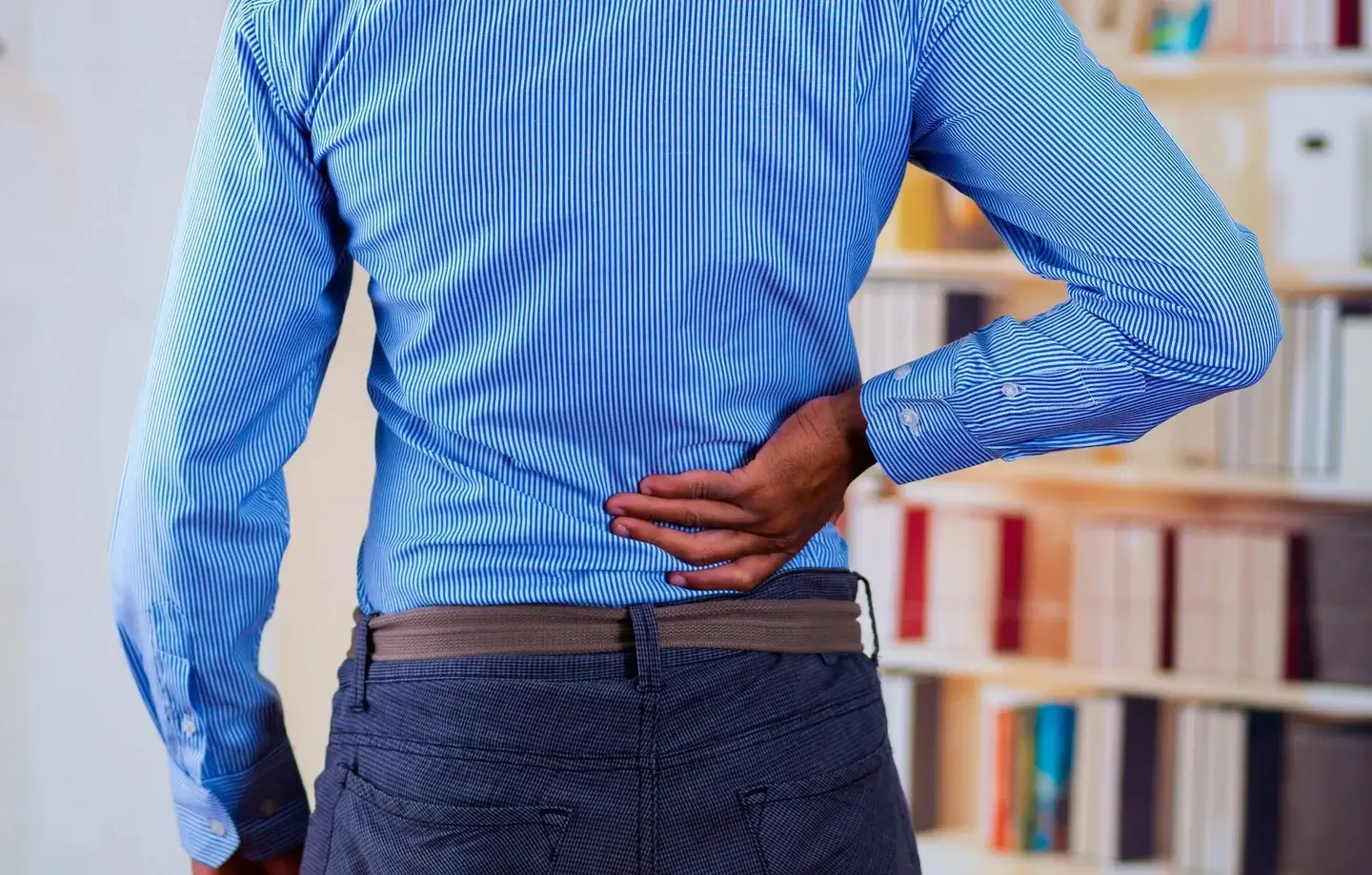
- Lower Back Pain: When your hips can't extend properly (a common issue for desk workers), your lower back is forced to over-arch to pick up the slack. This leads directly to chronic strain and discomfort.
- Knee Issues: If your hips lack the internal and external rotation they need, your knees can take on rotational stress they were never designed to handle. This is a fast track to pain, instability, and even injury.
- Poor Posture: Tight hip flexors, the classic result of prolonged sitting, can pull your pelvis forward into an anterior tilt. This completely disrupts your postural alignment from the ground up, a common issue we address with posture correction techniques.
- Reduced Athletic Performance: Whether you're a weekend runner along the lakefront or a dedicated gym-goer, stiff hips will absolutely limit your power, efficiency, and ability to perform movements with correct form.
At Pure Motion Chiropractic, we see firsthand how improving hip mobility can unlock a more active and pain-free life for our patients. It’s not just about stretching; it’s about restoring the fundamental patterns of movement that allow your body to function as an integrated, resilient system, easing your concerns about injury and long-term wellness.
Understanding why your hips feel tight is the first real step toward finding a solution. This isn't about blaming your desk job or your daily commute; it's about recognizing how your lifestyle impacts your body and taking proactive steps to counteract it. Our goal is to give you the knowledge and tools you need to move better, feel better, and get back to enjoying all that our Chicago neighborhoods have to offer—without limitation.
Why Are My Hips So Tight? A Look at City Life
If you’ve ever pushed your chair back after a long day at the desk and felt that deep, grabbing stiffness in your hips, you know the feeling all too well. It’s a common complaint for so many of us here in Chicago, from Roscoe Village to North Center. This isn't just a sign of getting older or a personal flaw; it's practically a predictable side effect of modern city living, and something we help our community with every day at Pure Motion Chiropractic.
The biggest culprits are often the most mundane parts of our day. Prolonged sitting is enemy number one. Think about it: hours at your desk, time spent in the car crawling along the Kennedy, and then collapsing onto the couch when you finally get home. When you sit, your hip flexors—the muscles right at the front of your hips—are stuck in a shortened, bunched-up position.
After a while, your body just adapts. Those muscles get used to being short and become chronically tight. This constant pull can tilt your pelvis out of its natural alignment, which often leads to that nagging lower back ache and makes it feel like a real effort just to stand up straight. This is a core issue we address with chiropractic adjustments and posture correction.
Your Hips: The Body's Central Hub
To really get why this is such a big deal, it helps to simplify the anatomy. The hip is a classic ball-and-socket joint, an incredible piece of natural engineering designed for a huge range of motion—forward, backward, sideways, and in full rotation. Think of it like a major traffic circle connecting all the main roads. When traffic is flowing, the whole system works.
But if there’s a major blockage in that roundabout? You get gridlock and chaos everywhere else. That's exactly what happens when your hips lock up. The muscles around them, like your glutes, hamstrings, and quads, either get tight from picking up the slack or weak from not being used properly. It creates a frustrating cycle of dysfunction.
Beyond the Desk Job: Common Triggers for Hip Stiffness
While sitting gets most of the blame, it’s not the only reason for tight hips. We see plenty of active people in our Roscoe Village clinic who are dealing with the same stiffness, often from repetitive movements or old issues that never fully resolved.
Here are a few other common causes we run into all the time:
- Repetitive Athletic Movements: Are you a weekend warrior who loves running the lakefront path or cycling the 606? Those activities are fantastic, but they primarily involve repetitive forward-and-backward leg motions. If you're not balancing that out with side-to-side and rotational work, some hip muscles get overdeveloped and tight while others get neglected.
- Old Injuries: That ankle you sprained years ago or that old knee injury can subtly change the way you walk. You might not even notice it, but over months or years, that compensation pattern creates imbalances that can eventually show up as hip tightness and pain. This is where treatment from an auto injury or sports chiropractor can be crucial.
- Stress and Tension: Where do you hold your stress? For many people, the answer is in their hips. Emotional tension often manifests physically, causing the muscles around the pelvis to stay "on guard" and clenched, never fully relaxing.
The bottom line is that our bodies are masters of adaptation. They will mold themselves to whatever we do most often. If your daily routine involves hours of sitting, your body will get really good at sitting—but often at the expense of being able to stand, walk, and move freely.
The good news? This isn't a life sentence. Just as your body adapted to a more sedentary pattern, it can re-adapt to one of freedom and mobility. Recognizing these triggers is the first, most powerful step. When you understand how your lifestyle contributes to the problem, you can start making targeted changes. To dig deeper into this topic, you can learn more about how prolonged sitting affects your overall health in our detailed guide. From there, you can begin to introduce the right movements and professional care to reclaim your mobility for a more comfortable, active life.
A Simple At-Home Hip Mobility Assessment
Before you jump into a routine, you need a starting point. Trying to improve your hip mobility without knowing your specific limitations is like trying to navigate Chicago traffic without a map—you might move, but you won't get where you want to go efficiently.
At Pure Motion Chiropractic, we want our patients to be active partners in their own health, and that starts with understanding your own body. These simple assessments will give you a personal baseline, showing you exactly which areas are crying out for the most attention.
This decision tree shows how easily both sedentary and highly active lifestyles can lead to the same outcome: tight hips.
Whether you’re logging hours at a desk or miles on the lakefront path, your hips can pay the price if you aren't deliberate about maintaining your mobility.
The Thomas Test for Hip Flexor Tightness
Your hip flexors, the muscles at the front of your hip, are notorious for getting tight. If you spend a good chunk of your day sitting, they're probably short and cranky. The Thomas Test is a classic way to see just how restricted they've become.
Here's how to do it:
- Sit right on the edge of a sturdy bed or a high, stable coffee table.
- Lie back and hug both knees to your chest. This is a crucial step to flatten your lower back against the surface and prevent it from arching.
- Keep a tight grip on one knee, holding it to your chest.
- Slowly let the other leg lower down, letting it hang completely free off the edge. Now, pay attention.
What you're looking for:
- Good Mobility: The back of your thigh should easily rest on the surface, or at least be parallel with the floor. Your knee should also hang at about a 90-degree angle without you having to force it.
- Signs of Tightness: Does your thigh pop up off the table? That's your hip flexor screaming. If your knee wants to straighten out instead of staying bent at 90 degrees, that points to tightness in your quads (rectus femoris muscle, specifically), which are part of that hip flexor group.
Hip mobility isn't just a "nice to have" for athletes; it's essential for daily function. Deficits can significantly impact quality of life, with research showing that restrictions in hip extension directly correlate with functional disability and lower back pain.
The 90/90 Test for Hip Rotation
Remember that your hip is a ball-and-socket joint. It's designed to rotate. This test is fantastic for checking both internal and external rotation—movements you need for everything from a deep squat to quickly changing direction while playing with your kids.
Here's how to do it:
- Sit down on the floor.
- Arrange your front leg so your shin is out in front of you, with your knee bent to 90 degrees.
- Swing your back leg out to the side, also bent at a 90-degree angle, so the inside of that thigh is on the floor. You should look like a "Z" from above.
- Now, the tricky part: try to sit up tall with a straight spine, avoiding the temptation to lean heavily to one side. Then, see if you can smoothly transition your legs to the opposite 90/90 position.
What you're looking for:
- Good Mobility: You can keep your torso relatively upright and both sit bones are fairly close to the floor. The switch from side to side feels controlled, not clunky.
- Signs of Tightness: If you have to lean way over, propping yourself up with your hand, or if the knee of your back leg is floating high in the air, you've found limited internal rotation. If your front knee won't rest comfortably on the floor, you're likely dealing with limited external rotation.
The Deep Squat Test for Overall Function
The ability to drop into a deep squat is a fundamental human movement. It's an incredible all-in-one test that exposes limitations in your hips, ankles, and even your thoracic spine. It tells us a lot about your body’s overall movement quality.
Here's how to do it:
- Stand with your feet about shoulder-width apart and your toes pointed slightly out.
- Keeping your chest proud and your back as straight as possible, drop your hips down and back like you're aiming for a tiny chair.
- Lower yourself as far as you can comfortably go. Ideally, your hips should pass below the level of your knees. Hold it for a second at the bottom.
What you're looking for:
- Good Mobility: You can get your hips below your knees, keep your heels planted firmly on the floor, and maintain a relatively upright torso.
- Signs of Tightness: If your heels immediately lift off the ground, that's often an ankle mobility issue, but it's closely tied to the hips. A sharp pinch in the front of your hips or having your lower back round significantly (what we call a "butt wink") are dead giveaways that your hips don't have the range of motion to handle that deep position.
These simple checks give you real, tangible information about your body. The data shows that for many Chicago area residents, especially those with desk jobs, a sedentary lifestyle chips away at mobility. Understanding these restrictions is the first step, as studies confirm a strong link between limited hip extension and higher disability scores in people with chronic back pain. You can read the full research about these functional limitations for a deeper dive. Once you know where you stand, you can tackle the right exercises with a clear purpose.
Foundational Drills to Restore Hip Mobility
Alright, you’ve established your baseline. Now it's time for the good part—getting to work and reclaiming that fluid, effortless movement you've been missing. We’re going to start with the essentials, focusing on foundational drills that hit the most common culprits of hip restriction.
Remember, the guiding principle here is consistency, not intensity. Your body doesn't respond well to being forced into a deep stretch it isn't ready for. In fact, aggressive stretching can backfire, causing your muscles to defensively tighten up. Instead, approach these movements with patience. Focus on your breath and aim for a gentle, sustained hold.
Kneeling Hip Flexor Stretch to Counteract Sitting
If you spend a good chunk of your day at a desk, this stretch is your new best friend. It’s a direct counterattack on the tightness that builds up in the psoas and iliacus muscles at the front of your hip—the very muscles that get short and cranky from hours of sitting.
How to Perform It:
- Get into a half-kneeling position on a soft surface. Your back knee should be right under your hip, and your front foot should be flat on the floor with that knee at a 90-degree angle.
- Here’s the key: before lunging, gently tuck your pelvis under, as if trying to flatten your lower back. This tiny adjustment is a game-changer; it isolates the stretch right where you want it instead of letting you cheat by arching your back.
- Slowly shift your weight forward into that front foot until you feel a clear stretch in the front of your back leg's hip.
- Breathe and hold this for 30-45 seconds. The biggest mistake we see is people leaning way too far forward and arching their back. Stay tall and keep that pelvic tuck.
Pigeon Pose for Deep Glute and Piriformis Release
Your glutes are absolute powerhouses, but they—along with deep rotators like the piriformis—can become incredibly tight. This tightness can even contribute to sciatica-like symptoms. Pigeon Pose is a classic for a reason: it delivers a profound release for these stubborn deep hip muscles.
How to Perform It:
- Start on all fours.
- Slide your right knee forward and place it on the floor just behind your right wrist. Angle your shin so your right foot is somewhere in front of your left hip. The more parallel your shin is to the front of the mat, the more intense this gets, so start with your foot closer to you.
- Extend your left leg straight back, keeping your hips as square as possible.
- You can stay propped up on your hands, or if it feels right, lower down to your forearms or even rest your forehead on the floor.
- Hold this for 45-60 seconds, trying to relax into the stretch with each exhale. A common error is letting your right hip pop up off the floor; do your best to keep both hips level.
Dedicating time to mobility isn't just about feeling less stiff; it translates to measurable improvements in strength and power. Consistent practice creates real, functional change in your body's capabilities.
The impact here goes beyond just feeling looser. Research shows that a consistent hip mobility program leads to significant functional gains. One study found that a daily lunge-and-reach stretching routine didn't just improve hip flexor length by an average of 5.92 degrees, but it also boosted single-leg broad jump distance by an average of 12.39 centimeters—a clear indicator of increased glute power. As you can see in the details of how hip mobility training enhances athletic performance in this study, just six weeks of this work can create major gains.
Frog Stretch for Adductor and Groin Opening
Let’s talk about the inner thighs. The adductors are often overlooked, leading to tightness that limits your ability to move your leg away from your body (abduction) and can even contribute to groin strain. The Frog Stretch is intense, but it’s one of the most effective ways to open up this entire area.
How to Perform It:
- Start on all fours again. Widen your knees as far apart as you comfortably can, keeping the insides of your feet and shins flat on the floor. Your ankles should be in line with your knees.
- Slowly lower yourself down onto your forearms.
- Gently rock your hips backward toward your heels until you feel a deep stretch through your groin and inner thighs.
- Hold for 45-60 seconds. The most common mistake here is letting the lower back arch excessively. Keep your core engaged to maintain a more neutral spine.
For quick reference, here's a simple breakdown of these essential drills.
Your Quick Guide to Foundational Hip Drills
| Exercise Name | Primary Target Area | Recommended Hold/Reps |
|---|---|---|
| Kneeling Hip Flexor Stretch | Hip Flexors (Psoas, Iliacus) | Hold for 30-45 seconds per side |
| Pigeon Pose | Glutes & Deep Hip Rotators (Piriformis) | Hold for 45-60 seconds per side |
| Frog Stretch | Inner Thighs (Adductors) & Groin | Hold for 45-60 seconds |
Consistently working through this simple sequence will lay a powerful foundation for better movement.
At our Roscoe Village clinic, we often build these exact movements into comprehensive treatment plans. While these stretches are incredibly powerful, they are one piece of the puzzle. We frequently pair them with specific chiropractic adjustments and other hands-on therapies. You can learn more about our approach to therapeutic exercises for Chicago patients here. By combining passive stretching with active strengthening and professional guidance, you build a resilient body ready for a long-term, pain-free life.
When to Seek Professional Chiropractic Care for Hip Pain
Dedicating time to at-home mobility drills is a fantastic way to take control of your health and restore function. For many people in our Chicago community, a consistent routine is often enough to ease stiffness and bring back a feeling of freedom in their movement.
But sometimes, self-care hits a wall.
If you've been diligently working on these exercises and your progress has stalled—or worse, if certain movements trigger a sharp pain instead of a productive stretch—that’s your body sending a clear signal. It’s telling you there’s likely a deeper issue at play that stretching alone won't fix.
This is the point where a professional evaluation becomes not just helpful, but essential for finding true, lasting relief. At Pure Motion Chiropractic, we help patients navigate this exact situation, providing clarity and effective treatment options.
Signs It’s Time to See a Chiropractor Near Me in Chicago
Learning to listen to your body's signals is crucial. A general feeling of muscular tightness is one thing, but sharp, persistent, or strange sensations point to a problem that simple stretching might not solve—and could even make worse.
Keep an eye out for these specific red flags:
- Sharp, Pinching, or "Catching" Pain: If you feel a distinct pinch or a "catching" sensation deep inside the hip joint during a deep squat or even a Pigeon Pose, it could be a sign of a joint mechanics issue like femoroacetabular impingement (FAI). This is where the bones of the hip don't have enough room to move freely, causing them to bump into each other.
- Pain That Worsens or Radiates: Discomfort that travels down your leg, shoots into your groin, or wraps around to your low back is a huge indicator that a nerve might be involved. This could be related to sciatica or referral pain from an irritated joint in your lumbar spine.
- A "Clunking" or "Popping" Sensation: While these noises aren't always a problem, if they come with pain, it's worth getting a professional opinion to rule out a labral tear or other structural issues in the joint.
- Significant Imbalance Between Sides: It's normal to have small differences in mobility from one side to the other. But if one hip feels dramatically tighter or weaker, it often points to an underlying imbalance in your pelvis or spine that needs to be properly addressed.
- You're Stuck. No Improvement After Weeks of Effort: If you’ve been consistent with your mobility work for several weeks and see little to no change, it's a strong sign the root cause isn't just tight muscles.
What to Expect When Visiting Pure Motion Chiropractic
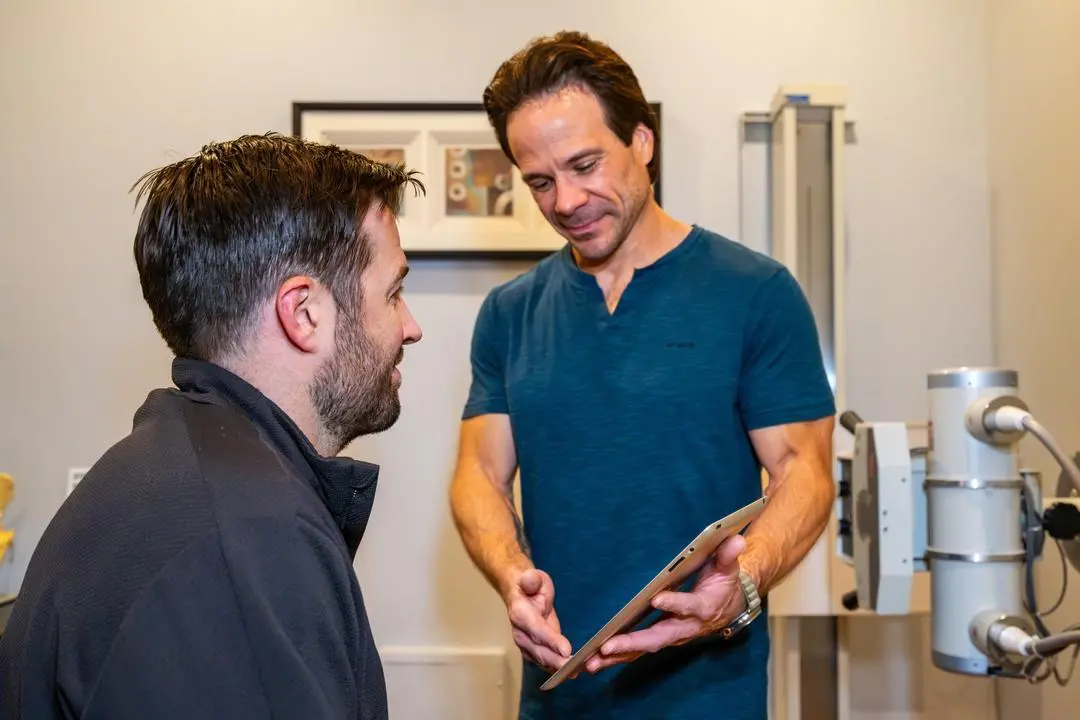
When you walk into our Roscoe Village clinic, our approach goes way beyond just looking at your hip. We operate from the understanding that your hip pain is very often a symptom of a much larger movement pattern problem. Our chiropractic assessment is designed to uncover the why behind your discomfort, providing a clear path to wellness.
Our goal is to analyze the entire kinetic chain—from your feet all the way up to your spine—to see how forces are being distributed through your body. Often, the area that hurts is simply the victim of dysfunction happening somewhere else.
We perform a detailed analysis that includes assessing your spinal alignment, pelvic balance, nerve function, and the specific mechanics of your hip joint. This lets us pinpoint the true source of the problem, which could be anything from a misaligned vertebra in your lower back to poor foot mechanics that alter your entire gait. This comprehensive view is essential for safe and effective recovery. Research on mobility programs has shown their clinical benefits, but it also highlights why professional guidance is key to applying them correctly.
From there, we build a personalized care plan. This might involve gentle chiropractic adjustments to restore proper joint motion in the spine and pelvis, targeted soft tissue work to release stubborn muscle adhesions, and a refined set of exercises designed specifically for your limitations. We explain more about how chiropractors can help improve your overall range of motion in another article.
Ultimately, seeking professional care is the logical next step when your own efforts aren't getting you where you need to be. It’s about getting an expert diagnosis and a targeted plan to finally break through those plateaus and get you back to moving freely and without pain.
Got Questions About Hip Mobility? We've Got Answers.
As you start digging into these assessments and drills, it's totally normal for questions to pop up. Here in our Roscoe Village clinic, we hear a lot of the same ones from people just starting out. Let's clear up some of the most common questions so you can move forward with confidence.
How Long Until I Actually Feel a Difference?
This is the big one, and the honest answer is: it depends. It's all about where you're starting from and how consistent you are. You're asking your body to unlearn years of ingrained movement patterns and tight tissues, and that takes a little time.
Most of our patients in Chicago start to feel a noticeable difference—like less morning stiffness or an easier time bending down—within just a few weeks of consistent care and at-home exercises. For those big, measurable gains in your range of motion, you'll want to give it about 4 to 6 weeks of dedicated work, hitting your routine at least 3-4 times a week.
Steady, sustainable progress is the name of the game, not overnight perfection. Think of it like learning an instrument; your body needs time and repetition to adapt. Getting a personalized plan from a professional can definitely speed things up by making sure you're hitting your specific weak spots.
Can I Really Improve My Hips If I Have a Desk Job?
Absolutely! In fact, if you spend your days sitting, it's even more critical. A desk job might be a huge contributor to tight hips, but you have the power to counteract its effects right there at your desk.
The secret is to pepper your day with "movement snacks." It’s a simple idea: just break up those long stretches of sitting with short bursts of activity. We’re big fans of setting a timer to get up every 30-45 minutes.
You don't need to launch into a full workout. Just try one of these:
- Stand up and do a few slow, controlled hip circles in each direction.
- Grab your desk for balance and do a quick quad stretch, pulling your heel toward your glute.
- Simply walk to the kitchen or water cooler, focusing on taking long, mindful strides.
These little movements are incredibly powerful. They stop stiffness from setting in and remind your hips of their real job: to move.
Should This Hurt? The Difference Between a Stretch and Pain
This is a non-negotiable point for your safety and progress. You have to learn the difference between a productive stretching sensation and actual pain.
A feeling of tension or a mild pulling sensation—what most people call a "good stretch"—is perfectly normal. That's just the feeling of your muscles and connective tissues getting a much-needed stretch.
However, you need to stop immediately if you feel:
- Sharp or pinching sensations, especially if they feel deep inside the joint.
- Pain that radiates down your leg or into your groin area.
- Any numbness or tingling.
These are your body's warning signals. They're telling you that you're either pushing too hard or that there might be an underlying joint issue that needs a professional look. This is exactly where a chiropractic evaluation at Pure Motion Chiropractic becomes invaluable. We can help you read those signals, figure out the root cause, and make sure your mobility routine is both safe and effective for your body.
If you're dealing with pain that just won't quit or you feel like your progress has hit a wall, it's time to get a professional opinion. Let the team at Pure Motion Chiropractic help you get to the bottom of your hip issues and create a personalized plan for lasting relief. Schedule your appointment online today and take the next step toward pain-free movement in Roscoe Village.