When that sharp, unexpected back pain hits, your first instinct might be to panic. Don’t. Your immediate response should be all about gentle, smart care to calm things down. The first 48 hours are crucial, and what you do right away can make a huge difference in how quickly you bounce back. At Pure Motion Chiropractic, we want to empower our neighbors here in Chicago with the knowledge to manage pain effectively and build a foundation for long-term spinal health.
Your First Steps for Immediate Back Pain Relief
Whether it’s a sudden twinge from lifting a grocery bag or a deep ache that sets in after a long day hunched over your laptop in your Logan Square apartment, that first jolt of pain is a clear signal to stop and listen to your body. The goal isn’t to be a hero and push through it; it’s to calm the irritated muscles and nerves without making things worse.
A lot of people automatically reach for a heating pad, but that’s often the wrong move in the beginning. Think of it this way: a new injury is like a small fire—it’s inflamed. Heat adds fuel to the fire by increasing blood flow and swelling. What you really want to do is put the fire out. That’s where ice comes in. Cold therapy helps constrict blood vessels, which can numb the immediate pain and, more importantly, reduce that initial inflammatory response.
The RICE Method, Tweaked for Your Back
You’ve probably heard of the RICE method (Rest, Ice, Compression, Elevation) for a sprained ankle. A modified version of this is your best friend for acute back pain.
- Rest (The Right Way): This isn’t about sentencing yourself to bed rest for three days. That can actually make you stiffer and prolong the problem. We’re talking about “active rest.” For a day or two, simply avoid the things that clearly make it hurt—no heavy lifting, no intense twisting, no marathon training. But keep moving around gently.
- Ice: Grab an ice pack, wrap it in a thin towel (never apply it directly to your skin), and place it on the sorest spot for 15-20 minutes at a time, a few times a day. This is most effective in the first couple of days after the pain starts.
- Compression & Elevation: These don’t apply to the back in the same way they do for a limb, but you can borrow the core principle: take the pressure off. Lying on your back with a pillow tucked under your knees is a great way to do this. It gently elevates your legs and lets your lower back relax into a more neutral position.
To help you navigate these crucial first hours, here’s a quick guide on what to prioritize and what to steer clear of.
At-Home Back Pain Relief Do’s and Don’ts
| Action | What to Do | What to Avoid |
|---|---|---|
| Temperature Therapy | Use an ice pack for 15-20 minutes at a time during the first 48 hours to reduce inflammation. | Applying direct heat, which can increase swelling and make acute pain worse. |
| Rest & Activity | “Active rest”—avoiding painful movements but continuing gentle, light activity like walking. | Complete bed rest for more than a day, which can lead to muscle stiffness and slower recovery. |
| Movement | Gentle, pain-free stretches like pelvic tilts or a slow cat-cow to maintain mobility. | Pushing through sharp pain, aggressive stretching, or any twisting motions that aggravate the area. |
| Lifting | Avoid lifting anything heavy. If you must lift something light, bend at your knees, not your waist. | Bending from the waist to pick things up, which puts immense strain on the lower back. |
| Support | Lie down with a pillow under your knees to take pressure off your lumbar spine. | Slouching on a soft couch or sitting in a chair with no back support for long periods. |
Remember, these at-home steps are designed to manage the immediate crisis. They are your first line of defense, not a permanent solution. If pain persists, seeking professional chiropractic care is the next step.
Gentle Movement is Your Friend
After that initial 24-hour period of taking it easy, it’s vital to reintroduce some gentle movement. If you stay completely still, your muscles will tighten up like a drum, and that can lock the pain in for much longer. The idea is to encourage blood flow and flexibility without triggering any sharp pain.
A perfect example is the single knee-to-chest stretch. Lying on your back, gently pull one knee toward your chest until you feel a comfortable stretch. Hold it for about 20 seconds, release, and then switch sides. The key here is comfortable.
Two other movements are fantastic for this early stage:
- Pelvic Tilts: Lie on your back with your knees bent and feet flat. Gently tighten your stomach muscles to press the small of your back flat against the floor. Hold for a few seconds, then relax. It’s a tiny movement, but it wakes up your core and mobilizes your lower back safely.
- Cat-Cow Stretch: Get on your hands and knees. Slowly and deliberately, arch your back up toward the ceiling (like an angry cat), then just as slowly, let your belly sag toward the floor (like a lazy cow). This is one of the best ways to get your spine moving without putting any real stress on it.
These strategies can provide significant relief and set you up for a smoother recovery. But if the pain is severe, isn’t getting better after a couple of days, or comes with other worrying symptoms, that’s your body’s way of telling you it’s time to call in a professional at Pure Motion Chiropractic.
What is Chiropractic Care and How Can It Help My Back Pain?
To get lasting relief, you first have to play detective and figure out what’s causing the problem in the first place. Back pain isn’t just one thing—it’s a symptom that can point to a whole host of issues, and many of them are woven directly into our daily lives right here in Chicago. The real answer to “how to relieve back pain” almost always starts with finding that root cause.
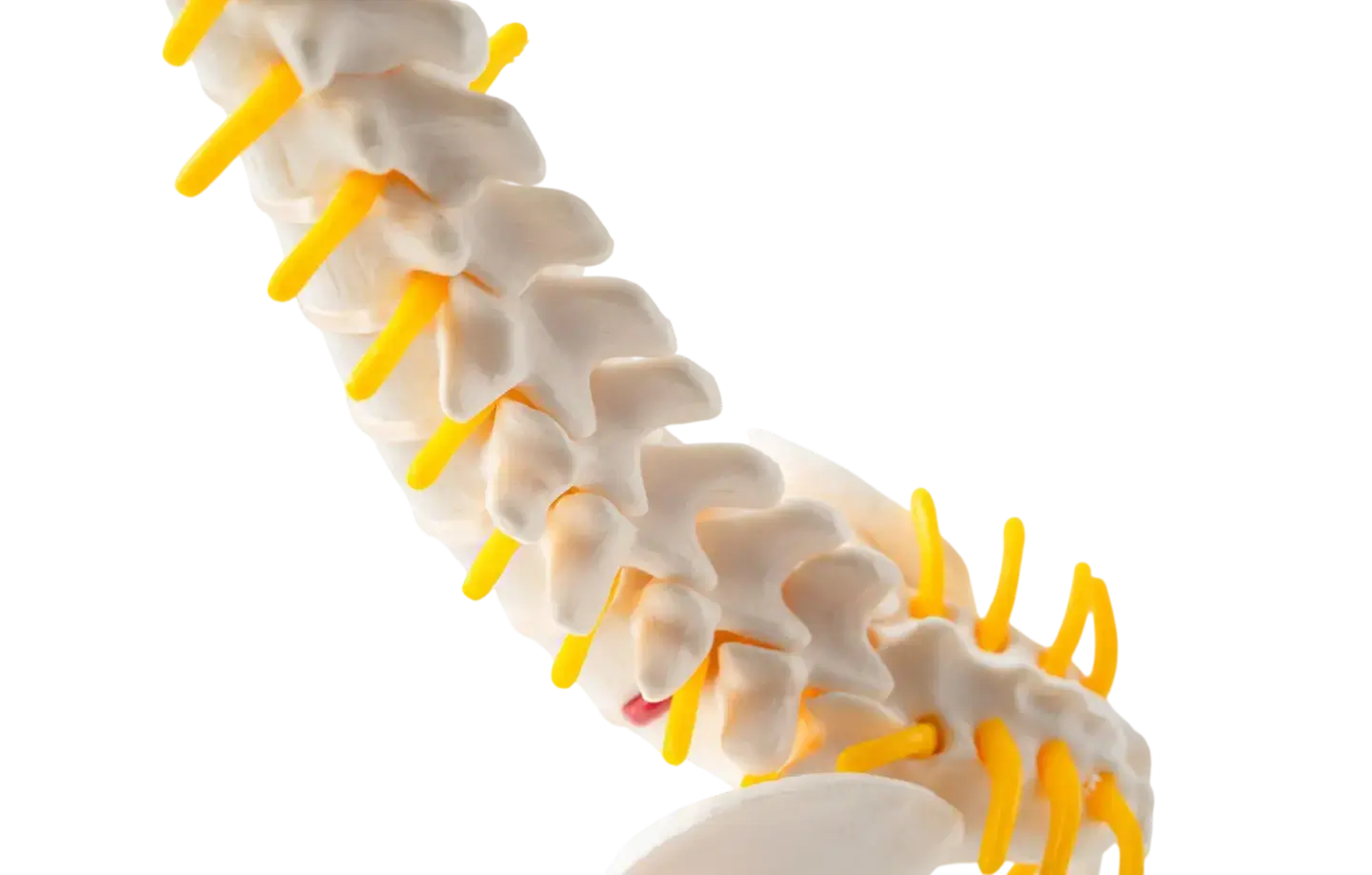
Your spine is an incredible piece of engineering, made of bones, discs, nerves, and muscles all working in harmony. Chiropractic care is a healthcare discipline focused on diagnosing, treating, and preventing musculoskeletal issues, especially those related to the spine. A chiropractor uses hands-on spinal adjustments and other alternative treatments to restore proper alignment, which in turn helps the body heal itself. The demands of modern life—like being stuck at a desk for eight hours in the Loop or going all out in a weekend volleyball game at North Avenue Beach—can easily push your spine out of alignment.
The Hidden Strains of Everyday Life
A lot of back pain triggers are subtle habits that quietly add up over months or even years. Think about the slow-building strain from slouching while you work from your apartment, the repetitive motion of lifting your toddler, or even how you curl up to sleep at night.
Most of the time, the culprits are mechanical issues. This just means there’s a problem with how the different parts of your back are moving and fitting together.
- Muscle or Ligament Strain: This is the classic cause of sudden, sharp back pain. It can happen in a single moment—like lifting a heavy box the wrong way—or it can build up from smaller, repetitive stresses over time.
- Poor Posture: When you consistently slouch, you’re putting a massive amount of strain on the ligaments and muscles in your back. They’re forced to work overtime just to keep you upright, and this chronic tension is a primary cause of those nagging, persistent aches.
- Lifestyle Factors: Living a mostly sedentary life can weaken your core and back muscles, leaving your spine feeling unsupported. On the flip side, jumping into intense activity without warming up or conditioning your body is another common way to wind up with an injury.
Understanding the ‘why’ behind your pain is incredibly empowering. It shifts you from being a passive sufferer to an active participant in your own recovery. When you realize your desk setup or lifting technique is the source of the problem, you suddenly have a clear, actionable starting point for feeling better.
For many people, the first steps toward relief are simple: a bit of rest, some ice, and gentle movement.
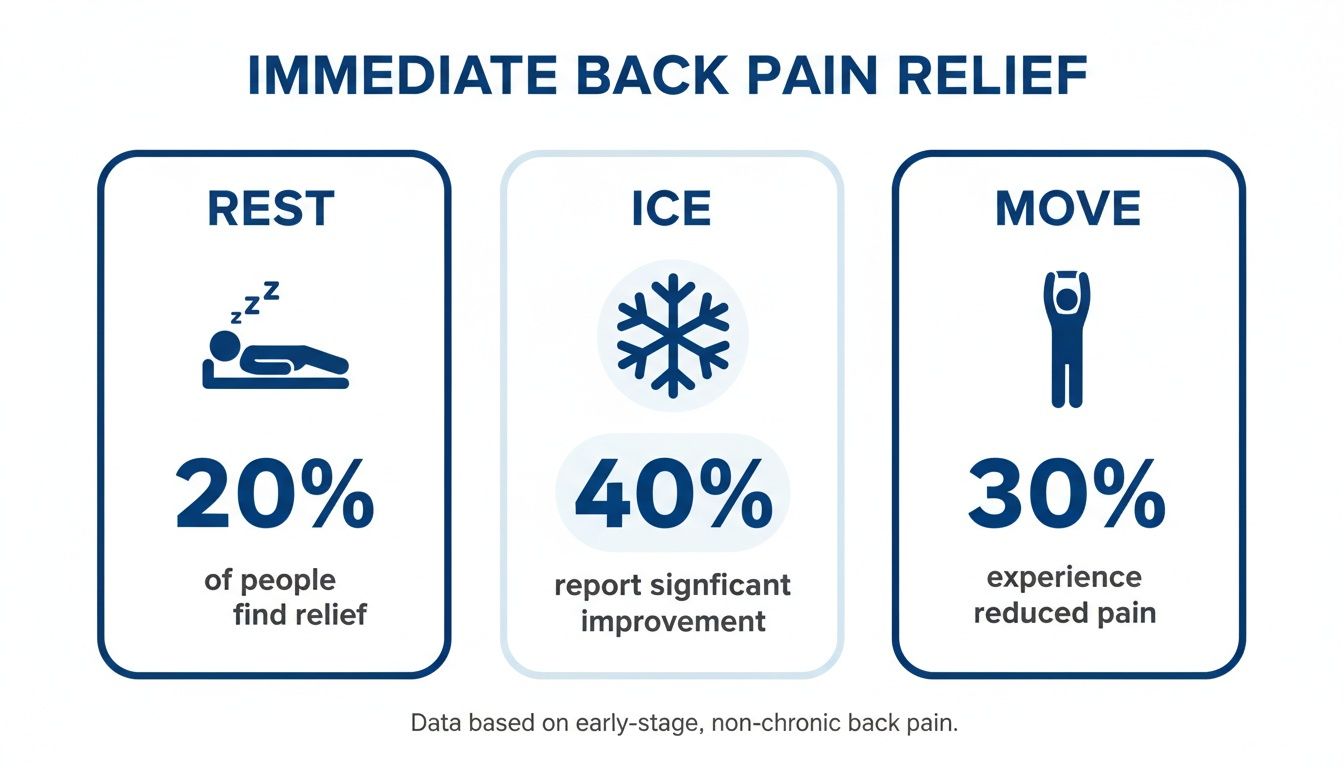
This shows that a smart mix of self-care strategies can be really effective for immediate relief while you work on fixing the underlying issue.
More Complex Structural Issues
Sometimes, the pain is a signal of something more specific happening inside the spine itself. These conditions often have intimidating names, but they are incredibly common and very treatable with the right chiropractic approach.
A herniated or bulging disc is a great example. Think of the soft discs between your vertebrae as little jelly donuts. If the tougher outer layer weakens, the jelly-like center can start to bulge or even squeeze out, putting pressure on the nerves nearby. That pressure is what causes the sharp, often shooting pain.
Sciatica isn’t a condition itself, but a symptom. It’s the term for the pain, numbness, or tingling that travels down the large sciatic nerve, which runs from your lower back all the way down each leg. A herniated disc is one of the most frequent causes of sciatica, a condition we treat regularly at our clinic.
Other structural problems can include:
- Degenerative Disc Disease: This is just the natural wear and tear of aging. Over time, spinal discs can lose water and shrink, which can lead to stiffness and pain.
- Spinal Stenosis: This is a narrowing of the canal your spinal cord runs through, which can compress the spinal cord and nerves.
- Skeletal Irregularities: Conditions you’re born with, like scoliosis, can affect your spinal alignment and lead to chronic discomfort over time.
Back pain is a massive issue affecting millions. Just to put it in perspective: in 2020 alone, an incredible 619 million people worldwide were dealing with low back pain, making it the single leading cause of disability across the globe. And it’s not getting better—projections for 2050 forecast a 36.4% jump to 843 million cases, mostly due to aging populations. You can explore more about these global trends00098-X/fulltext) and see how they’re impacting health worldwide.
No matter the cause—whether it’s a simple muscle strain from a weekend project or a more complex disc issue—identifying it is the most critical step. Here at Pure Motion Chiropractic, our first job is always to listen to your story and perform a thorough assessment to pinpoint the exact source of your discomfort. This lets us build a precise plan to not just relieve your pain but to fix the underlying problem for good.
Building a Stronger Back with Safe Stretches and Exercises
While getting immediate relief is crucial when you’re in the thick of it, building a truly resilient back is a long game. It requires a proactive approach. Think of your spine as the mast of a ship—it needs strong, flexible support from all sides to stay upright and stable through rough seas. That support comes from a combination of limber muscles and a sturdy, engaged core.
The goal here isn’t to become a powerlifter overnight. Instead, we’re focusing on consistent, controlled movements that bring back balance and strength to the very muscles that protect your spine.
So many people get stuck in a frustrating cycle: the pain stops them from moving, and the lack of movement leads to more stiffness and weakness, which—you guessed it—causes more pain. Breaking this cycle starts with gentle, purposeful exercises.
Unlocking Flexibility Where It Matters Most
It’s amazing how stiffness in one part of your body can create a domino effect that ends up overloading your lower back. Two of the most common culprits we see at Pure Motion Chiropractic are tight hamstrings and tight hip rotators, especially a little muscle called the piriformis.
Picture your hamstrings—those big muscles on the back of your thighs—as tight ropes constantly pulling your pelvis downward. This tilt flattens the natural, healthy curve of your lower back, putting a ton of strain on the muscles and discs. Releasing that tension can be an absolute game-changer.
Key Takeaway: Flexibility isn’t just about touching your toes. It’s about restoring proper pelvic alignment to take unnecessary pressure off your lumbar spine.
Here are a couple of essential stretches to get you started:
- Supine Hamstring Stretch: Lie on your back with both knees bent. Grab a towel or strap and loop it around the ball of one foot. Gently straighten that leg up toward the ceiling, pulling lightly on the strap until you feel a comfortable stretch in the back of your thigh. You’re looking for a mild stretch, not sharp pain. Hold for 30 seconds while breathing deeply, then switch legs.
- Piriformis Stretch: Still on your back, cross one ankle over the opposite knee to make a “figure four” shape. Now, gently pull the bottom thigh toward your chest until you feel a stretch deep in the hip and glute of the leg that’s crossed over. This stretch targets the piriformis, a small muscle that can wreak havoc by pressing on the sciatic nerve when it gets too tight. Hold for 30 seconds on each side.
Building Your Core Foundation
When most people hear “core strength,” they immediately picture grueling sit-ups and crunches. But true core stability is much more subtle than that. It’s about learning to activate the deep abdominal and back muscles that wrap around your midsection like a natural corset, providing constant, reliable support for your spine.
A strong core acts like a built-in shock absorber, distributing forces evenly so your spinal structures don’t have to take the full brunt of every step you take.
These foundational exercises are perfect for building that deep strength without putting your already-sore back at risk.
- Bird-Dog: Get on your hands and knees with your back flat. The key here is to brace your abdominal muscles to keep your torso perfectly still. Then, slowly extend your right arm straight forward while extending your left leg straight back. The real trick is keeping your hips and shoulders completely level—try to imagine you’re balancing a glass of water on your lower back. Hold for a few seconds, return to the starting position, and switch sides.
- Plank: Position yourself on your forearms and toes, keeping your body in a dead-straight line from your head to your heels. Don’t let your hips sag toward the floor or rise up to the ceiling. Really focus on pulling your belly button in toward your spine. To start, just aim for holding a perfect form for 20-30 seconds.
When it comes to these movements, consistency is far more important than intensity. Doing them just a few times a week can fundamentally change how your body supports itself, turning a vulnerable back into a strong and resilient one.
Modern Posture Fixes for a Healthier Spine
In our modern lives, especially for professionals here in Chicago, the biggest threats to our spine rarely come from heavy labor anymore. Instead, the real culprits are our desks and devices. Poor posture has become a quiet epidemic, leading to nagging, persistent back pain. That gradual slouch over a laptop or the downward tilt of your head while scrolling on your phone might seem harmless in the moment, but over time, these habits place an incredible amount of strain on your spine.
The good news? Reclaiming good posture and ditching the back pain it causes doesn’t require a complete life overhaul. It’s all about making small, mindful adjustments to your daily routines. These simple changes can break the cycle of strain and help you build a stronger, more resilient back.
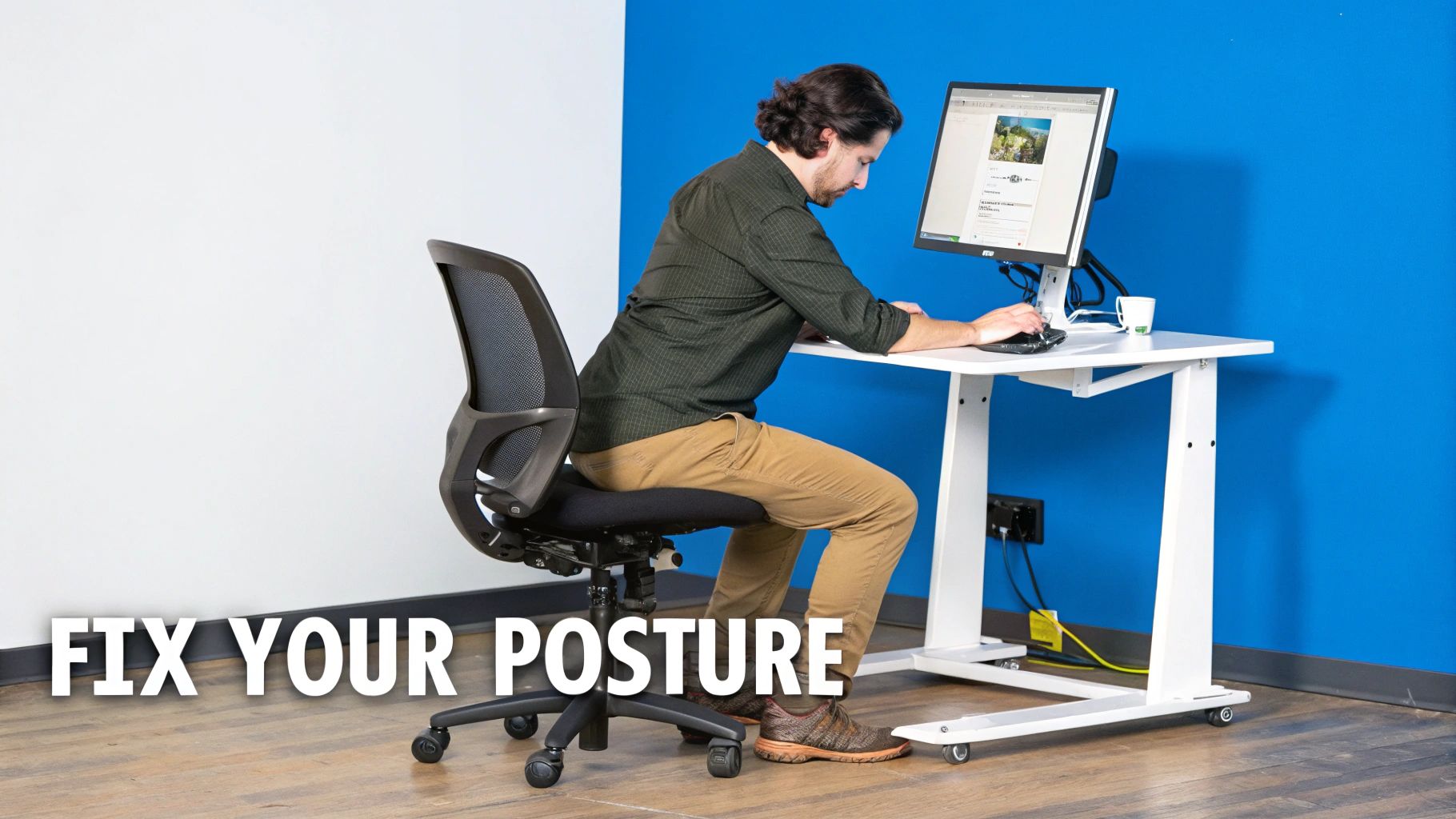
Creating an Ergonomic Workstation
Whether you’re in a downtown high-rise or working from your Roscoe Village home, your desk setup is your first line of defense against back pain. An ergonomic workspace is designed to fit you, not the other way around. This simple shift in perspective reduces physical stress and is fundamental for anyone looking to find lasting relief.
Here’s how to build a spine-friendly setup:
- Elevate Your Monitor: Your screen should be directly at eye level. If you have to look down, even slightly, you’re encouraging your head to drift forward and your shoulders to slump. An easy fix is a monitor stand or even a sturdy stack of books.
- Support Your Lower Back: Your chair should have good lumbar support to maintain the natural inward curve of your lower spine. If your chair is lacking, don’t rush out to buy a new one—a rolled-up towel or a small lumbar pillow can make a world of difference.
- Keep Your Feet Flat: Both feet should rest comfortably flat on the floor, with your knees bent at roughly a 90-degree angle. If your feet are dangling, use a footrest or a small box to create a stable base.
This isn’t just about being comfortable; it’s about preventing long-term damage. The reality is that desk jobs are a massive contributor to back pain globally. Analysis from the Global Burden of Disease 2021 study projects that by 2050, the number of working-age adults with low back pain will soar to 581.3 million cases worldwide. That’s a staggering 28.5% increase from 2021, fueled by population growth and the sedentary lifestyles common right here in Chicago.
Beyond the Desk: Daily Posture Habits
Posture isn’t just about how you sit at a computer. It’s about how you carry your body all day long. The strain from “tech neck” is a perfect example of a modern postural challenge that contributes significantly to upper back and neck pain.
Key Insight: Good posture is an active state, not a passive one. It requires conscious effort to engage your core muscles and align your body, whether you’re standing, walking, or even sleeping.
Here are three other critical areas to focus on:
- Mindful Smartphone Use: Instead of craning your neck down to look at your phone, try lifting the device up to eye level. This simple switch can prevent pounds of unnecessary strain on your cervical spine.
- Proper Lifting Mechanics: When you lift anything—from a grocery bag to your child—always bend at your knees and hips, not your waist. Keep the object close to your body and engage your core to protect your lower back from injury.
- Optimal Sleeping Positions: Sleeping on your stomach can force your head into an awkward, twisted position for hours and flatten the natural curve of your spine. The best positions are on your back with a pillow under your knees or on your side with a pillow between your knees to keep your hips aligned.
These small, consistent adjustments are powerful tools for relieving back pain. By becoming more aware of these everyday habits, you take an active role in protecting your spine for years to come.
How Your Lifestyle Choices Affect Your Back
True, lasting relief from back pain goes way beyond just stretches and posture fixes. We have to look at the bigger picture—the small choices you make every single day. The food you eat, the water you drink, the way you manage stress… all these things lay the foundation for a healthy spine.
At Pure Motion Chiropractic, we see the whole person, not just a set of symptoms. And often, people are surprised when we start talking about diet and weight in relation to their back pain.
Think of it this way: your spine is built to carry a specific load. When we carry extra weight, especially around the midsection, it pulls the pelvis forward and creates a deep, stressful curve in the lower back. This constant mechanical strain overloads the muscles, ligaments, and discs, creating a perfect storm for chronic aches and inflammation.

This isn’t just a theory; it’s a massive global health issue. The burden of back pain directly linked to a high BMI has exploded. Between 1990 and 2021, the years people lived with disability from this one factor nearly doubled to a staggering 8.4 million.
The problem is especially bad in high-income North America, where sedentary jobs and high obesity rates collide. If you’re interested in the data, you can explore the full research on how BMI impacts global disability from back pain.
Fueling Your Body for Less Pain
What you eat can either fan the flames of inflammation or help put them out. Shifting to an anti-inflammatory diet is one of the most powerful tools you have for managing chronic pain, and it doesn’t have to be complicated or restrictive. It’s all about making simple, smart swaps.
The goal is to focus on whole, nutrient-dense foods that give your body the raw materials it needs to repair tissue and calm systemic inflammation.
Here are a few easy ways to get started:
- Embrace Healthy Fats: Ditch the processed vegetable oils and reach for olive oil, avocados, and nuts. They’re packed with omega-3 fatty acids, which are nature’s anti-inflammatories.
- Eat the Rainbow: Fill your plate with colorful fruits and veggies like leafy greens, berries, and broccoli. These are loaded with antioxidants that protect your cells from stress.
- Choose Lean Proteins: Opt for fish, poultry, and beans instead of processed meats or large amounts of red meat, which can sometimes contribute to inflammation.
A simple shift in your diet can have a profound impact on how you feel. When you reduce inflammation from the inside out, you create an environment where your back can truly start to heal. This makes any chiropractic care you receive even more effective.
Why Your Spine Is Thirsty for Water
One of the most overlooked secrets to back health is simple hydration. Your spinal discs—those soft, gel-like cushions between your vertebrae—are made of up to 80% water when you’re young. They need a steady supply to stay plump and do their job of absorbing shock.
When you get dehydrated, these discs lose height and flexibility, almost like a tire slowly losing air. This shrinkage increases pressure on your spinal nerves and is a direct contributor to pain and stiffness.
Just aiming for eight glasses of water a day is a simple but incredibly effective step toward keeping your spine supple and resilient. Every sip is a direct investment in your back.
When to See a Chicago Chiropractor for Back Pain
Home care strategies like ice, gentle stretches, and fixing your posture are fantastic first-line defenses for back pain. They can often calm down an irritated muscle or quiet a minor flare-up pretty quickly.
But what happens when the pain just doesn’t listen? How do you know when it’s time to move beyond self-care and get a professional opinion?
The most important thing you can do is listen to your body. A bit of muscle soreness after a tough workout or a long day of yard work is one thing. Persistent, nagging, or worsening pain is a completely different signal—it’s your body telling you something more is going on under the surface. Ignoring those signals can turn a highly fixable issue into a frustrating, chronic problem.
Deciding to see a specialist can feel like a big step, but it’s actually an incredibly empowering move toward taking back control of your health.
Key Signals It’s Time for Professional Help
Sometimes, your symptoms are like a clear roadmap pointing you toward the right kind of help. Certain types of pain are red flags that the underlying issue needs a precise diagnosis and a targeted treatment plan. If you’re experiencing any of the following, it’s a good idea to schedule a consultation with a chiropractor in Chicago.
- Pain Radiating Down Your Leg: If your back pain doesn’t stay in your back and instead shoots, travels, or burns down into your buttock or leg, that’s a classic sign of nerve compression. This is often related to sciatica or a disc issue that won’t resolve on its own.
- Persistent Numbness or Tingling: Sensations like “pins and needles,” weakness, or numbness in your legs or feet are not something to brush off. This usually points to a nerve being pinched or irritated somewhere along its path from your spine.
- Pain That Lingers for More Than a Week: Most simple muscle strains start feeling better within a few days of rest and smart home care. If your pain isn’t improving—or is getting worse—after a week, that’s a strong sign the root cause hasn’t been addressed.
- Discomfort That Interferes with Daily Life: When back pain starts running your life—forcing you to miss work, skip workouts, or avoid picking up your kids—it’s time for a new strategy. Pain should never be in the driver’s seat.
Your body is incredibly smart. These symptoms aren’t just random annoyances; they are direct communications telling you that an underlying mechanical problem needs professional attention. A chiropractor is trained to decode these signals and identify the structural source of the problem.
What to Expect When You Visit Pure Motion Chiropractic
We get it—seeking care can bring up questions and a little nervousness, especially if you’ve never been to a chiropractor before. Our entire process here at Pure Motion Chiropractic in Roscoe Village is designed to be clear, welcoming, and reassuring from the moment you walk through our door. Our patient experience is built on partnership and trust.
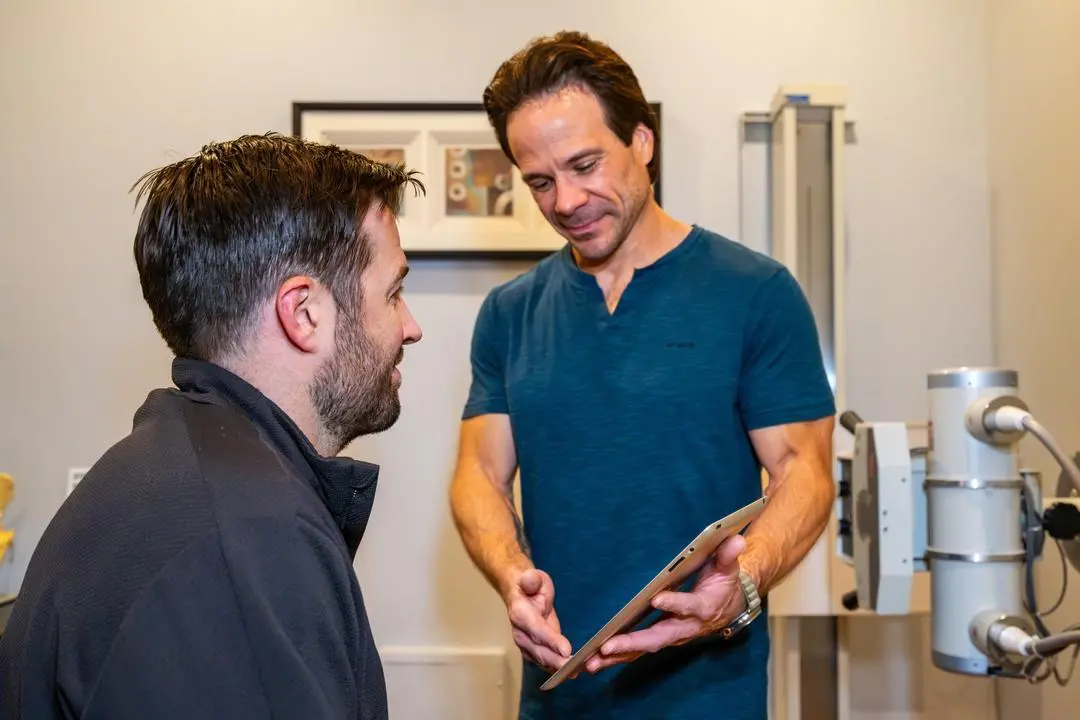
Our approach is built on partnership. We take the time to really listen to your story—how the pain started, what it feels like, and how it’s messing with your life here in Chicago. That conversation is the foundation for everything we do.
Here’s a simple breakdown of what your first visit will look like:
- A Real Conversation: You’ll sit down with your doctor to discuss your health history, what’s been going on, and what your goals are. This isn’t a rushed, impersonal appointment. It’s a genuine conversation focused completely on you.
- A Thorough Assessment: Next, your doctor will perform a comprehensive physical exam. This involves specific orthopedic and neurological tests to pinpoint the exact source of your pain. We look at your posture, your range of motion, and how your body moves as a whole to get the complete picture.
- Your Personalized Game Plan: Based on the assessment, your doctor will explain what’s going on in simple, easy-to-understand terms. They will then lay out a personalized treatment plan designed to not only relieve your pain but also correct the underlying issue to help prevent it from coming back.
We believe education is a huge part of healing. That’s why we explain everything as we go and give you exercises and lifestyle tips to support your recovery at home. Our goal is to make your path to feeling better a collaborative and empowering one.
We Hear You: Answering Your Questions About Back Pain Relief
Taking that first step toward feeling better can bring up a lot of questions. We get it. Here are some of the most common things people ask us when they walk into our Chicago clinic, along with some straight-to-the-point answers.
How Long Will This Take? Am I Going to Feel Better Right Away?
This is probably the #1 question we hear, and the honest answer is: it’s different for everyone. Some people get off the table after their first adjustment and feel an immediate, noticeable sense of relief. It’s like a light switch has been flipped back on.
For others, especially if you’ve been dealing with a nagging, chronic issue for years, it’s more of a gradual process. It might take a few visits over a couple of weeks to really unwind the tension and get lasting results. During your first visit, we’ll do a full assessment and give you a realistic idea of what your personal road to recovery looks like. No guesswork, just a clear plan.
Is Chiropractic Care Actually Safe for My Back?
Absolutely. For the vast majority of back pain causes—like mechanical low back pain, sciatica from a disc issue, or just years of hunching over a desk—chiropractic care is one of the safest and most effective treatments out there.
But safety always comes first. That’s why our initial exam is so thorough. We need to know exactly what’s causing your pain. If we find something that needs a different kind of medical attention, we won’t hesitate to refer you to the right specialist. Your well-being is the only thing that matters.
I’ve Already Had Back Surgery. Can a Chiropractor Still Help Me?
Yes, and this is more common than you might think. Many people who’ve had back surgery find chiropractic care to be a huge help in their long-term recovery. Our approach is always gentle and carefully tailored to your history.
We’re not going to be working directly on the surgical site. Instead, we’ll focus on restoring mobility to the surrounding areas of your spine and releasing the muscle tension that often builds up as your body compensates. Just be sure to tell us all about your surgical history so we can create a plan that’s both safe and incredibly effective for you.
Ready to stop letting back pain call the shots? The team at Pure Motion Chiropractic is here to figure out what’s really going on and build a plan that gets you moving and feeling better.
Book your appointment online and let’s get started.